PDPA Singapore Checklist: How Data Trust Drives Startup Growth

Building a venture-backed startup or growing business in Southeast Asia requires navigating strict data privacy regulations. The Personal Data Protection Act, commonly known as pdpa singapore, regulates how organizations collect, use, and process personal data in Singapore's digital economy.
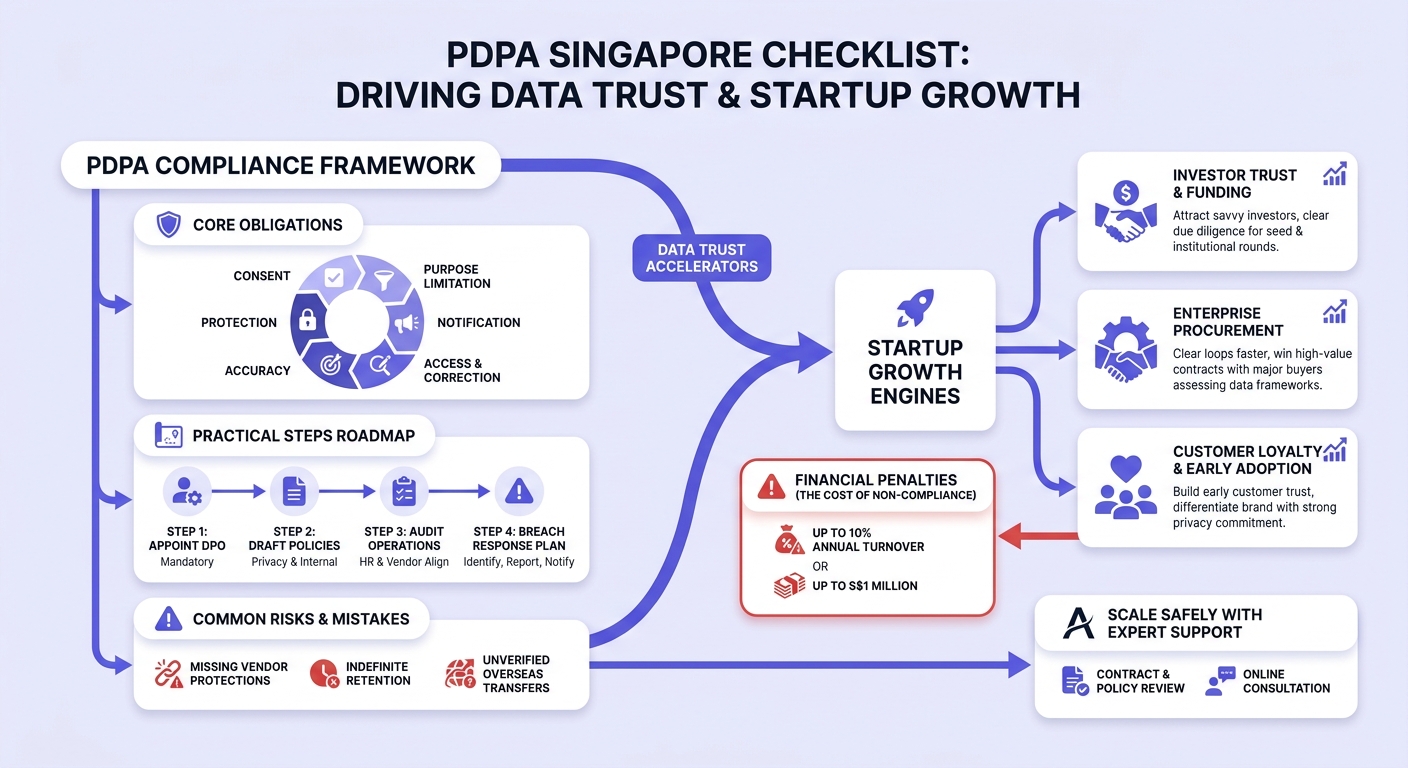
While compliance might seem like a regulatory burden, data trust is actually a major growth asset. Bad actors face severe consequences: the PDPC can impose financial penalties of up to 10% of an organization's annual turnover in Singapore, or up to S$1 million, for serious data breaches. Protect your business today to attract savvy investors, clear enterprise procurement loops, and win the trust of your early customers.
Let us explore what you need to do to build a secure, compliant business framework under Singapore law without slowing down operational momentum.
Table of Contents
- Quick Summary
- What is PDPA Singapore and Why It Matters
- The Core Obligations Under the PDPA
- Practical Steps to PDPA Compliance
- Common Startup Risks and Mistakes
- When to Seek Legal Support
- How AirCounsel Helps You Scale Safely
- Recommended
- Frequently Asked Questions
Quick Summary
| Takeaway | Explanation |
|---|---|
| Who it impacts | All private-sector businesses collecting or processing personal data in Singapore. |
| Key officer requirement | Every company must designate a Data Protection Officer (DPO). |
| Maximum statutory penalty | Up to 10% of annual local turnover or S$1M for serious data breaches. |
| Growth benefit | Accelerates enterprise vendor onboarding, seed funding rounds, and customer trust. |
| Action plan | Establish clear privacy policies, align contracts, and run staff training. |
What is PDPA Singapore and Why It Matters
The Personal Data Protection Act regulates how companies manage individual data points—including names, phone numbers, email addresses, and identification numbers. According to the official legislative overview from the Personal Data Protection Commission (PDPC) Overview, the framework is designed to balance individuals' right to protect their data and organizations' business needs to gather information for reasonable uses.
For startups and small-to-medium-sized businesses (SMBs), prioritizing data protection means survival and faster scale. Major enterprise buyers and global clients assess data protection frameworks during due diligence. If your company cannot prove its systems align with local rules, you risk losing high-value contracts and institutional fundraising options.
The Core Obligations Under the PDPA
The PDPC enforces key core obligations that startups and SMBs must integrate into daily workflows:
- Consent: You must secure voluntary, positive agreement from individuals before collecting, using, or sharing their records.
- Purpose Limitation: You can only use data for the specific, reasonable purposes you clearly shared beforehand.
- Notification: You must explain the underlying purpose of data collection before or during the collection process.
- Access and Correction: Customers have a right to ask what information you have stored on them and request updates to correct inaccurate records.
- Accuracy: Keep data clean, updated, and highly accurate, particularly if the records affect vital customer payouts or decisions.
- Protection: Put robust technical security in place to block hacking, theft, unauthorized exposure, or loss.
These rules govern all data, from newsletter leads to sensitive personnel records. When drafting or updating standard terms, securing an expert review of your vendor agreements is essential because third-party software risks often fall entirely on your shoulders. Learn how to protect your team with a cost-effective Review of your Contract or Legal Document.
Practical Steps to PDPA Compliance
Reaching compliance does not require freezing your processes. Follow this four-step roadmap to build a solid foundation.
- Step 1: Appoint a Data Protection Officer (DPO): It is a statutory must-have under Singapore law. Your assigned DPO can be an existing employee, but their contact details must be made available to the public.
- Step 2: Draft External and Internal Policies: Publish a clear Privacy Policy on your web portal and layout internal security procedures detailing how employees handle company files.
- Step 3: Audit Your Employment Operations: Employee files are also protected by law. Integrate updated data processing and disclosure rules across your HR team. Make sure your onboarding steps align with local statutory guidelines by utilizing a professional Review of your Employment Contract by our Expert Singaporean Lawyers.
- Step 4: Establish a Simple Breach Response Plan: Know exactly who to call, when to report a leak to the PDPC (generally within 3 calendar days of identifying a registrable breach), and how you will notify affected customers.
| Compliance Area | Timeframe | Importance |
|---|---|---|
| Appoint a DPO | Immediate | Statutory Mandatory Requirement |
| Draft Privacy Policy | 3-5 days | High (Customer facing) |
| Align Employee Contracts | 1 week | High (Internal HR operations) |
| Audit Third-Party Contracts | Ongoing | Critical for operational security |
Common Startup Risks and Mistakes
Many emerging ventures cut corners only to run into costly challenges later. Learn from these common organizational mistakes:
- Missing Vendor Protections: Many systems integrate software modules without confirming that the platform matches local data guidelines. If they leak data, your brand carries the reputational hit.
- Keeping Documents Indefinitely: Under the retention limitation rule, you must dispose of records as soon as maintaining them no longer satisfies practical commercial or legal targets.
- Unverified Overseas Transfers: You cannot send data outside Singapore unless the target country offers a comparable standard of privacy protections, as explained in the PDPC Key Concepts Guidelines.
When to Seek Legal Support
You do not need an in-house legal team to establish functional compliance. However, you should secure professional advice when your startup begins deploying deep-tech features, executing complex B2B customer contracts, or managing international transfers.

Strategic support helps you identify liabilities before they can compromise your next funding round or client launch.
How AirCounsel Helps You Scale Safely
AirCounsel makes data protection and commercial transactions painless for growing ventures in Singapore, providing top-tier legal guidance without the typical big-firm prices.
If you are signing external service providers, launching software updates, or hiring your core team, our experienced lawyers offer fast, flat-fee solutions. Reduce risk and increase buyer value with our flexible Review of your Contract or Legal Document starting at just SGD 335.
If you have questions about regional rules or need immediate support with an urgent operational draft, schedule an Online Consultation today to chat directly with our responsive team.
Recommended
- Expert新加坡 General Contract Review Panel
- Fast Online Consultations for Modern Founders
- Comprehensive Employment Agreement Review for Singapore Teams
This article provides general information and is not legal advice.
Frequently Asked Questions
Does the PDPA Singapore apply to small businesses and sole proprietors?
Yes. The rules apply to all private-sector individuals, companies, and organizations that collect, utilize, or disclose personal details in Singapore, regardless of their size, age, or organizational structure.
Do I need to appoint a Data Protection Officer under the PDPA?
Yes. Appointing a Data Protection Officer is a statutory mandatory requirement under Singapore law. Your DPO acts as the primary link between your organization and the regulatory authorities while keeping your internal systems aligned with statutory policies.
What counts as personal data under PDPA Singapore?
Personal data includes any information about an individual who can be identified from that specific file, or from that data combined with other info that the organization holds. Examples include full names, identification card numbers, residential phone numbers, work emails, and personal health details.
What should I do if my startup has a data breach?
You must follow your pre-arranged breach playbook immediately. Identify the security leak, stop further exposure, and verify if the event is a registrable breach. If the breach causes (or is likely to cause) significant harm to individuals, or affects 500 or more people, you must notify the PDPC within 3 calendar days of identification.
Need Legal Assistance?
Our expert legal team is ready to help you navigate complex legal matters with confidence.